Northern Pakistan Travel Guide: Best Time to Visit and What to Know

Software Developer & Digital Tools Creator
At a glance
Write each overnight stop and the road needed to reach it. Ask the accommodation and transport operator about the current route, then compare their information with official weather and hazard advisories. An old travel vlog cannot confirm that a road is open today.
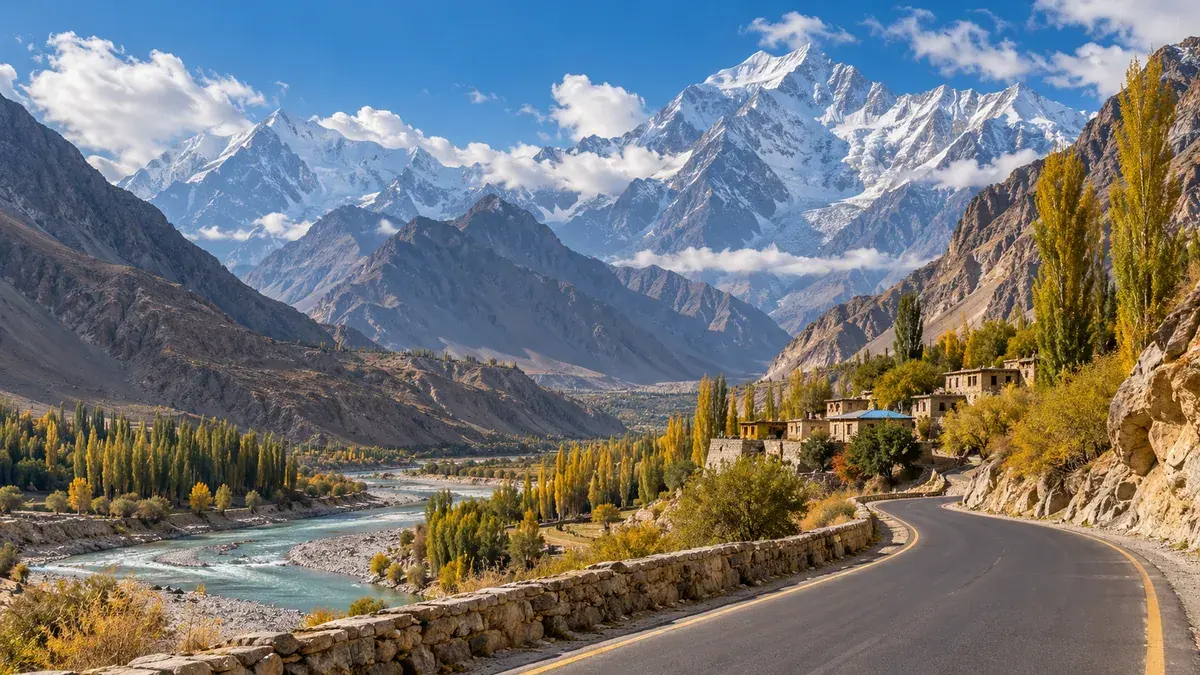
Northern Pakistan consistently ranks among the world's most dramatic mountain landscapes, home to some of the highest peaks on Earth, valleys that shift character completely from one region to the next, and a genuine sense of scale that's hard to fully appreciate until you're standing in it. Planning a trip here well requires understanding a few region-specific realities that don't apply to typical travel planning elsewhere.
Make a route decision the day before departure
Write each overnight stop and the road needed to reach it. Ask the accommodation and transport operator about the current route, then compare their information with official weather and hazard advisories. An old travel vlog cannot confirm that a road is open today.
Keep a spare day and identify where you can safely stop if the next leg is delayed. Do not treat travel times from a map as promises on mountain roads. Avoid scheduling a long road transfer immediately before an inflexible flight.
Check access requirements for your nationality and intended route, and arrange qualified local support for activities beyond ordinary road sightseeing. For altitude-related health questions, seek travel-health advice rather than relying on a generic itinerary. Cancel or reroute when conditions make the journey unsuitable.
Current-condition source: Pakistan NDMA advisories.
Understanding the Region's Diversity
"Northern Pakistan" isn't a single destination — it encompasses distinct regions including Hunza, Skardu, Swat, Naran-Kaghan, and Chitral, each with its own character, accessibility, and best-season timing. Treating the entire north as one uniform destination leads to poor planning; researching your specific intended region rather than generic "Northern Pakistan" advice produces a far more accurate, useful trip plan.
The Best Time to Visit Depends Heavily on Altitude
Lower-altitude areas like Swat and lower Kaghan are pleasantly accessible for a longer window, roughly April through October, while higher-altitude regions like upper Hunza and Skardu have a notably shorter comfortable travel window, generally May through September, with some high mountain passes only accessible for an even narrower period due to snow. Checking current conditions specifically for your intended route and altitude, rather than assuming a single blanket "best season" for the entire north, prevents arriving to find key roads or passes still closed.
Road Conditions Require Real Planning
Roads in Northern Pakistan vary enormously in condition, from well-maintained highways to rough, sometimes weather-dependent mountain roads. The Karakoram Highway connecting to Hunza and Gilgit is generally well-maintained and a scenic journey in its own right, while some routes to more remote valleys can be considerably rougher and are best undertaken with a reliable 4x4 vehicle and a driver experienced with the specific terrain, particularly outside peak season.
Peak Season Brings Real Crowds and Price Surges
The most popular northern destinations, particularly Naran, Hunza, and parts of Swat, see dramatic crowding and price increases during peak summer months and long holiday weekends. If your schedule allows flexibility, visiting just before or after these peak windows offers a different, more relaxed experience with lower prices, which is a strategy covered in more depth in our broader guide to budget trip planning in Pakistan.
Altitude Sickness Is a Genuine Consideration
Some Northern Pakistan destinations sit at high altitude, and altitude sickness is a real risk worth taking seriously if your itinerary includes higher elevations, particularly if you're ascending quickly rather than gradually. Staying well-hydrated, ascending gradually where your itinerary allows, and being aware of altitude sickness symptoms — headache, nausea, dizziness — so you can respond appropriately rather than pushing through are all worth planning for in advance rather than learning about only once symptoms appear.
Connectivity Is Limited in Many Areas
Mobile signal and internet connectivity become increasingly unreliable the further you travel into more remote northern valleys, and some areas have essentially no connectivity at all. Downloading offline maps in advance, informing family or friends of your rough itinerary before losing signal, and carrying physical cash (since card payment and ATM access become unreliable in more remote areas) are all practical necessities rather than optional precautions in this region specifically.
Pack for Dramatic Temperature Swings
Even during warm-weather travel months, mountain regions in Northern Pakistan often see significant temperature drops after sunset, sometimes a difference of 20 degrees Fahrenheit or more between midday and nighttime temperatures. Packing genuine layering options, even for a summer trip, prevents the common mistake of being underprepared for surprisingly cold evenings at higher elevations.
Respecting Local Customs and Communities
Northern Pakistan's various regions have distinct local cultures and customs, and dressing and behaving respectfully according to local norms — which can vary somewhat by specific valley and community — is both a matter of basic courtesy and something that tends to lead to warmer, more genuine interactions with local communities during your trip.
Accommodation Ranges Widely by Region
Accommodation options range from simple guesthouses to increasingly higher-end hotels in more developed tourist areas like Hunza and Naran, with more remote valleys offering more basic, often homestay-style options. Booking ahead during peak season is important in popular areas, since availability can be limited, while more remote areas may require more flexible, arrive-and-ask planning where advance online booking isn't always practical or available.
Combining a Northern Trip With Broader Budget Planning
A Northern Pakistan trip's cost varies enormously depending on region, season, and travel style, and the general budget travel principles — off-peak timing, local transport options, guesthouses over branded hotels — covered in our Pakistan travel budget guide apply directly and can reduce the overall cost of a northern trip without sacrificing much of the actual experience.
Talking to Recent Visitors Before You Go
Conditions in Northern Pakistan — road access, weather, prices — can shift from year to year and even season to season, more so than in many other travel destinations. Reaching out to recent visitors through travel forums or social media groups focused specifically on the region, rather than relying solely on older guides or general advice, often surfaces the most current, accurate picture of what to expect for your specific planned dates and route.
Try our Free Digital Tools Suite
Explore browser-based tools for everyday digital tasks.
Ukasha Altaf
Software Developer & Digital Tools Creator
Founder of Ukasha Mart. Building free, accessible browser-based utilities and writing in-depth tutorials on modern technology, freelancing, and practical online work.
Explore Further